By Brown Thrasher Movers | Alpharetta, GA | Published April 2026 | Updated October 22, 2026
Category: Atlanta Moving Tips · Local Infrastructure · Relocation Resources
If you’ve driven through Buckhead, Sandy Springs, Roswell, or Alpharetta anytime in the last few months, you’ve already seen it.
Not just traffic.
The kind of change you don’t miss:
Tree lines gone. Red Georgia clay exposed. Construction pushed right up against active lanes.
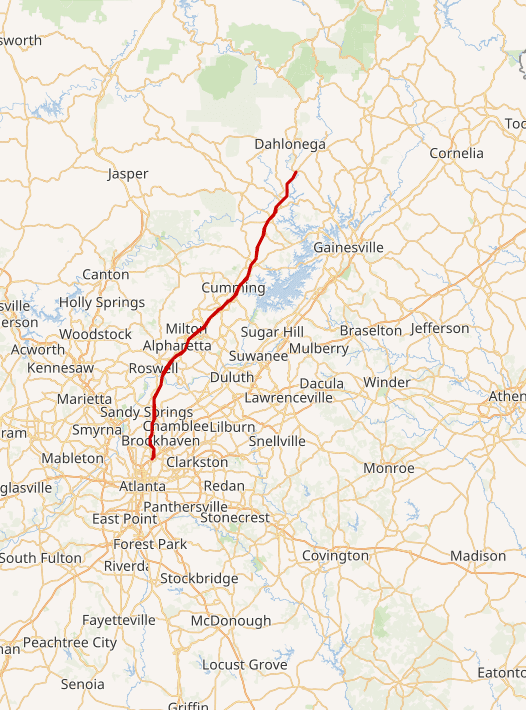
The GA-400 corridor is undergoing what GDOT has called the largest transportation infrastructure project in Georgia’s history — a 16-mile express lanes expansion, about $4.6 billion to design and build, running from the North Springs MARTA station in Sandy Springs north to McFarland Parkway in Forsyth County, with substantial completion targeted for 2031. GDOT / Build America
This isn’t a planning phase. It isn’t a study. Heavy construction has been underway since April 2026, with lane closures, ramp changes and work zones along the corridor.
And from a moving standpoint, that matters more than most people realize.
At Brown Thrasher Movers, we run this corridor constantly — typically multiple jobs a week between Abernathy Road and Windward Parkway alone. What we’re seeing right now isn’t theoretical disruption.
It’s operational.
Moves that used to be predictable are no longer predictable.
What has changed since spring (updated October 22, 2026)
- Heavy construction began in April 2026. Crews have moved past tree clearing into earthwork, drainage, barrier walls and temporary traffic shifts (GDOT update).
- Sandy Springs: southbound Exit 5 closed in late August 2026 for up to two years. Temporary Exits 5A and 5B opened August 29, about 0.6 mile south (North Springs MARTA) and 1.1 miles south (Abernathy Road and Hammond Drive). Follow the current signs, not the old exit (details).
- Roswell and Alpharetta: active work zones run between Holcomb Bridge Road (Exit 7), Mansell Road (Exit 8) and Haynes Bridge Road (Exit 9).
- Alpharetta and Milton: the northbound flex lane from just south of Webb Bridge Road to Windward Parkway is scheduled to close permanently starting December 13, 2026, weather permitting (details).
- Forsyth County: crews are working between McGinnis Ferry Road and McFarland Parkway.
- Work happens day and night. Overnight closures typically run from 9 p.m. to 5 a.m., and no work is scheduled on holidays (GDOT FAQ).
- Before your move, check the GDOT SR 400 Express Lanes project page and Georgia 511 for that day’s closures.
The Gap Between ‘Map Time’ and Reality Is Growing
A 10–15 mile move along GA-400 used to be simple to plan. Today, that same move can vary by an hour or more depending on lane closures, staging zones, and time-of-day construction activity.
We’ve seen 30-minute drives stretch past 90 minutes. Mid-morning routes back up unexpectedly due to equipment staging. Surface streets like Roswell Road and Hammond Drive absorbing overflow traffic that has nowhere else to go.
Early in construction, GDOT flagged the northbound ramps to Northridge Road and Mansell Road, plus Colquitt Road, Old Dogwood Road and Roberts Drive. Since then, the biggest access change has been in Sandy Springs, where southbound Exit 5 closed in August 2026 and was replaced by temporary Exits 5A and 5B. [Construction Review Online]
What’s important here isn’t just delay — it’s variance. That unpredictability is what disrupts moving schedules, causes missed elevator windows, and turns a four-hour job into a seven-hour one.
The issue isn’t that GA-400 is slow. It’s that you can’t predict when it will be slow — and that uncertainty is the real operational problem.
Where the Friction Is Most Noticeable Right Now
These are the specific pressure points we’re tracking across every job on this corridor right now:
The I-285 / GA-400 Interchange — Sandy Springs
Sandy Springs is home to more than 108,000 residents and the densest concentration of corporate campuses in north Fulton County — making it the highest-volume moving destination on the corridor. (U.S. Census Bureau, 2024)
Interchange modifications here cause periodic through-lane reductions. If you’re moving to or from Buckhead, a high-rise on Peachtree Road, or a unit near Lenox Square, this interchange shapes your truck’s arrival window. Our Sandy Springs movers team checks GDOT closure notices every morning before any corridor job.
Since August 29, 2026, southbound drivers can no longer use Exit 5. Temporary Exits 5A and 5B, about 0.6 and 1.1 miles farther south, serve North Springs MARTA and Abernathy Road and Hammond Drive. GDOT expects the closure to last up to two years.
Abernathy Road to Northridge Road — Sandy Springs
The most consistently active segment right now. Lane closures here are frequent and shift week to week. Residents moving out of high-density Perimeter Center near Hammond Drive have told us directly that getting a moving truck in and out during peak construction windows is a genuine logistical problem, not just an inconvenience.
“We scheduled our move for a Tuesday thinking we’d avoid weekend traffic. The construction crew had Northridge blocked from 7am until almost noon. Our movers had to reroute through Roswell Road both ways.” — Sandy Springs resident, March 2025
Holcomb Bridge and Mansell Ramp Areas — Roswell
Roswell’s population reached approximately 94,000 in 2024 — up about 6% from 88,346 in 2010 — making it one of the largest cities in north Fulton County. (U.S. Census Bureau)
These ramp areas are actively being reconfigured as part of the express lanes build-out. New bus rapid transit (BRT) stations are planned at Holcomb Bridge Road and North Point Mall, on a MARTA line running from North Springs to the Windward Parkway park-and-ride (source). If you’re moving to Roswell’s Historic District, the Canton Street area, or new developments east of 400, your Roswell moving services team needs routing options that don’t depend on clean 400 access.
Haynes Bridge Road and Old Milton Parkway — Alpharetta
Alpharetta is the technology employment hub of the corridor — home to 700+ technology companies and a median household income of $147,612. GDOT projects the GA-400 corridor will absorb 114,000 new jobs and 144,000 new residents by 2050. (GDOT / ENR)
Alpharetta is where we’re based, and we see this play out daily. The Avalon corridor, downtown Alpharetta, and the Webb Bridge Road neighborhoods are all accessible without touching 400 directly — but construction backup bleeds onto surface streets during morning and evening windows. Our moving companies in Alpharetta team plans primary and backup routes for every job in this segment.
Windward Parkway / Cogburn Road — Milton
Milton consistently ranks among the top 10 wealthiest cities in Georgia by median household income, with a median home value exceeding $700,000. Estate and high-value property moves here require extended logistics planning.
Milton is largely insulated from the worst congestion, but access to and from 400 via Windward can still be impacted by spillover. Large estate properties with long driveways and no room for a semi to turn around need extra buffer built into any move window. See how our Milton GA movers approach high-value property logistics.
One change to plan for: starting December 13, 2026, weather permitting, the northbound flex lane from just south of Webb Bridge Road to Windward Parkway closes permanently, and a concrete barrier goes in. Expect tighter northbound traffic through this stretch during peak hours.
Market Place Boulevard / GA-20 Connector — Cumming (Forsyth County)
Forsyth County grew 7.9% between 2020 and 2023 — one of the fastest growth rates in Georgia — and added 6,700 new residents in 2024–2025 alone, ranking 4th among all Atlanta-area counties. (Atlanta Regional Commission, 2025)
The express lanes project ends about a mile north of McFarland Parkway (Exit 12), just south of Cumming. Exit 14 and the GA-20 connector are outside the project, but Cumming-bound trucks still pass through the active work zone between McGinnis Ferry Road and McFarland Parkway. Families moving to Cumming GA from Atlanta should plan for GA-9 or alternative approach routes rather than depending purely on 400 access during active construction windows.
What This Looks Like on an Actual Move Day
There’s a pattern we’re seeing repeatedly: a move that should comfortably fit a half-day window suddenly runs long — not because of packing or labor, but because transit becomes the unpredictable variable.
Scenario 1: Sandy Springs to Alpharetta — 12 Miles
Transit alone ran nearly two hours round-trip due to a northbound restriction near Northridge Road. The crew was ready. The customer was ready. The road wasn’t. The family had already vacated their Sandy Springs home and was waiting at the new Alpharetta address with two kids and a dog. Two hours. In an empty house.
The fix: any move crossing the Abernathy-to-Mansell segment should plan transit at 2–3x the Google Maps estimate during business-day windows in our experience, then adjust for that day’s closures.
Scenario 2: Managed Building Near Perimeter Center
Loading dock reserved. Elevator booked. A 30–40 minute delay caused by construction rerouting meant the truck missed its slot. Everything stacked after that: rescheduled elevator, compressed unloading window, extended total job time.
Our apartment moving Alpharetta and Sandy Springs teams now confirm building flexibility policies before every managed-building job. The fix: call your building manager before move day and explicitly ask about their construction-delay policy.
Scenario 3: Commercial Office Relocation — Alpharetta
A business relocating from a Haynes Bridge Road office park to Old Milton Parkway ran directly into an early-morning lane closure on the 400 ramp. IT equipment in a climate-controlled truck. 90 minutes of backup at 7:30am. The business opened two hours late on their first day.
Our commercial office relocation Alpharetta team now starts all weekday commercial jobs at 9:30am or later — or moves them to weekends entirely.
Why the Tree Clearing Matters More Than People Think
The most visible part of the project right now isn’t paving — it’s clearing. Large sections of tree cover are gone, especially between Sandy Springs and Alpharetta. That’s not cosmetic.
According to GDOT, the project team has been actively acquiring right-of-way along the corridor — a process that precedes grading and construction and explains the clearing activity visible from the highway. GDOT says work happens both day and night. Overnight work typically runs from 9 p.m. to 5 a.m., and no work is scheduled on holidays, so daytime moves can still run into work zones. [GDOT Major Mobility Investment Program]
From experience, once you see this level of clearing, the project timeline is real. Not proposed. Not delayed. Moving forward.
The tree clearing you’re seeing along 400 between Sandy Springs and Alpharetta is GDOT acquiring and preparing the right-of-way. Since April 2026, grading, drainage and barrier work have followed, and tree clearing resumed on six sections in August 2026. The disruption window is real and the clock is running.
What This Means Long-Term — And Why People Are Still Moving Anyway
Despite the disruption, demand along this corridor hasn’t slowed. If anything, it’s increasing.
GDOT’s own project documentation projects the GA-400 corridor will need to absorb 114,000 new jobs and 144,000 additional residents by 2050 — the explicit population pressure that justified the multibillion-dollar investment. [Engineering News-Record / GDOT]
There’s a pattern Atlanta has repeated before: infrastructure improves, accessibility improves, demand follows. We saw it after the GA-400 toll removal in 2013. We’re likely seeing the early stages of the same cycle again — this time with a much larger infrastructure investment behind it.
Cumming and south Forsyth County could benefit as access improves after construction.
Forsyth County grew 7.9% between 2020 and 2023 and is projected to see a 79% population increase by 2050, reaching over 450,000 residents — driven directly by its proximity to employment centers in Alpharetta and north Fulton County. [Atlanta Regional Commission / Justin Landis Group]
Whether that shows up in home prices is uncertain, so choose a home based on today’s commute, schools and costs. Roswell and Milton will see continued demand pressure — both communities are already among the most sought-after in north Fulton, and the highway improvements only reinforce that.
Some families are deliberately delaying their north Fulton move by 12–18 months to wait out the disruption. Others are moving now and accepting the friction. Both are valid. What doesn’t work is planning a move as if road conditions haven’t changed — because they have, and they will continue to.
How the New Express Lanes Will Work
When the lanes open, targeted for 2031, they will be optional, barrier-separated toll lanes with prices that rise and fall with traffic. The existing general-purpose lanes stay free. Drivers need a Peach Pass or compatible transponder. MARTA buses and registered vanpools ride free, which is what makes the planned bus rapid transit line possible. The plan calls for two express lanes in each direction up to McGinnis Ferry Road, then one in each direction to McFarland Parkway (project details).
A note for moving day: GDOT’s rules allow vehicles with two axles and up to six wheels, but freight vehicles and trailers are not allowed. A moving truck carrying household goods should plan on the general-purpose lanes, even with a Peach Pass. If you are renting a truck yourself, check with the State Road and Tollway Authority before counting on the express lanes.
What Actually Makes a Move Work Right Now
There’s no way to remove construction from the equation. But there are ways to work around it.
Book earlier than you think you need to.
The construction is compressing available scheduling windows for moving companies and building access in managed communities. If your target move date is more than three weeks out, start the booking process now.
Have a backup route conversation before move day.
Any mover operating on this corridor should be able to tell you their planned route and their backup route before you sign anything. We plan every GA-400 corridor move with a primary route, secondary route, and live morning-of adjustments based on GDOT’s overnight closure schedule.
Avoid the 7–9am and 4–6pm windows on weekdays.
Schedule your move to begin at 9:30am or later on a weekday, or run a Saturday move. Our cleanest moves right now are Saturday mornings between 8–9am.
If you’re moving to a managed building, communicate early.
Contact your building manager before move day, explain the GA-400 construction reality, and ask about their construction-delay flexibility policy. Most are accommodating — if you ask in advance, not on the day.
Special consideration for senior relocations: Senior relocation services along this corridor require even more buffer time. Any managed timing window needs to be treated as a hard constraint, not a guideline.
Frequently Asked Questions: GA-400 Expansion and Moving in North Atlanta
GDOT has set a substantial completion target of 2031 for the full 16-mile express lanes project. The project is structured as a public-private partnership with SR 400 Peach Partners, which will operate and maintain the lanes for 50 years after construction. Heavy construction has been underway since April 2026. [GDOT / Build America Bureau]
Yes — the construction is disruptive but temporary, and both communities continue to see strong demand and high quality of life. The highway improvements will ultimately make them more accessible; the main consideration is planning your move logistics around current conditions, not where they were two years ago.
Potentially yes — longer construction-driven transit times can affect total hours on time-based moves. See our moving cost guide and ask any mover specifically how they handle construction-related delays in their billing before you sign.
Ask directly: what are current conditions on GA-400 between Sandy Springs and Alpharetta, and what is your backup route? A knowledgeable local mover will answer without hesitation — if they can’t give you specifics, that’s your answer.
The express lanes project ends about a mile north of McFarland Parkway, so the GA-20 area is outside it, but trucks heading to Cumming pass through the active work zone between McGinnis Ferry Road and McFarland Parkway. Moving trucks approaching Cumming from Atlanta should plan for GA-9 or alternative routes rather than relying purely on 400 access during active construction windows.
Only if your situation allows genuine flexibility — the project runs through 2031, so indefinite delay isn’t a practical strategy. Choose a mover who understands current conditions and has built those realities into your plan.
The Bottom Line
The GA-400 expansion is the largest transportation project in Georgia’s history. It’s actively reshaping commute patterns, neighborhood demand, and day-to-day logistics — including moving.
Most people notice the traffic. Fewer understand how it affects everything behind the scenes. If you’re planning a move anywhere along this corridor, the difference isn’t just who you hire. It’s whether they understand what’s actually happening on the road right now — and whether they’ve built that reality into your move plan.
Planning a Move Along the GA-400 Corridor?
Brown Thrasher Movers is based in Alpharetta, GA. We run moves up and down the GA-400 corridor every week — Buckhead, Sandy Springs, Roswell, Alpharetta, Milton, Cumming. We know the current construction conditions, the specific ramps that are affected, the backup routes, and we communicate proactively before every move day.
Get a free moving quote — we’ll walk you through current road conditions on your specific route.
Brown Thrasher Movers
844 Ivy Vine Way, Alpharetta, GA 30004
Phone: 706-908-4815
Email: info@brownthrashermovers.com
USDOT: 4528173
About the Author
Brown Thrasher Movers
Brown Thrasher Movers is a licensed, owner-operated moving company based in Alpharetta, Georgia (USDOT 4528173). We serve the GA-400 corridor daily — Buckhead, Sandy Springs, Roswell, Alpharetta, Milton, and Forsyth County — and have direct, operational knowledge of construction conditions on this corridor that most moving guides simply don’t have. This article reflects what we are actually seeing on the road, on actual move days, in real time.
Services: local moving, long-distance moving, apartment moving, commercial and office relocation, packing and unpacking, piano and high-value item moving, senior relocation, and white-glove delivery.
Contact us at info@brownthrashermovers.com or 706-908-4815 to discuss your move.